Shipyard Agency Guide: Tuzla and Yalova–Altınova
Shipyard agency covers the coordination between the yard, class society, technical teams and authorities while a vessel is under maintenance, repair or dry-docking, whereas port agency focuses on arrival, cargo and departure. Tuzla in Istanbul and Yalova–Altınova on the south-eastern Marmara coast are the main yard areas. BAF Shipping's Tuzla branch is in the shipyard area and serves Yalova from there.
How does shipyard agency differ from port agency?
Both services act for the vessel, but they cover two very different periods in her life. At a commercial port the ship is alongside for cargo and the call may last a few days; at a yard she usually leaves trading and enters a work programme running for days or weeks. The shipyard agent's job is therefore to follow the progress of that programme, tie material and people movements to it, and report daily to the owner.
| Aspect | Port agency | Shipyard agency |
|---|---|---|
| Focus | Cargo operations and port entry–exit | Maintenance, repair, dry-docking and the technical work list |
| Duration | Usually a short stay | A period of days or weeks |
| Main counterparts | Terminal, harbour master, cargo parties | Yard management, class, subcontractors, technical teams |
| Heavy logistics | Provisions, crew, documents | Spare parts, technical personnel, equipment, waste and supplies |
| Reporting | At completion and on developments | Daily progress follow-up |
What kind of place is the Tuzla shipyard area?
Tuzla is a district at the far south-east of Istanbul's Asian side, on the Marmara coast, with an area of about 138 km². It is known for a coastal strip where ship repair and building yards are concentrated, which is why Tuzla is the first address for many vessels entering a yard. Because ships of different owners are often in the area at the same time, shared resources (pilots, tugs, launches, transport) are in demand and timing matters.
BAF Shipping's Tuzla branch is in the Yayla district, in the shipyard area. The district centre is about 2 km away, our Zeytinburnu (Zeyport) branch is about 47 km by road and our Beylikdüzü head office about 73 km. Shipyard agency, crew change, spare-parts delivery and provisioning requests for vessels at Tuzla are run from this branch.
What sets the Yalova–Altınova yard area apart?
Yalova lies on the south-eastern coast of the Sea of Marmara, and Altınova is the settlement where the shipyard cluster on the Yalova shore lies. The area stands out for shipbuilding and repair activity. Yalova's 2022 population is 133,109 (source: Wikipedia/Wikidata). Because it is a different shore from Tuzla, the movement plan for a vessel differs: the road time of teams, materials and documents has to be taken into account.
We serve the Yalova yards from our Tuzla branch. From the branch it is about 39 km (35 minutes) by road to Altınova and about 59 km (51 minutes) to Yalova city centre; times vary with traffic. That is why departure times for technical teams, spares or paperwork going to Yalova are planned in advance.
How does logistics work during repair and dry-docking?
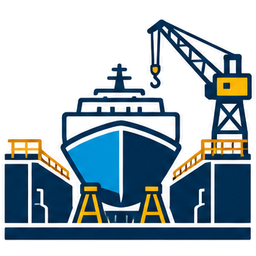
Dry-docking is the period when the vessel is lifted out of the water so that the hull and underwater fittings can be inspected. Some on-board services (water, power, waste) are restricted at that time and the crew often lives according to the yard's programme. The agent's logistics tasks include:
- Following the official notifications for yard entry and departure
- Coordinating waiting and anchoring arrangements tied to docking and undocking times
- Bringing class and survey inspectors to the vessel
- Delivering spare parts and equipment to the yard, under customs or transit arrangements
- Transferring the technical team and service engineers
- Following gate-pass and permit procedures; the rules are set by the yard
How are crew, technical teams and materials coordinated?
During a yard period the number of crew on board may be reduced, some people leave and new technical specialists join. These movements depend on sign on / sign off procedures, airport meeting and transport, and the agent plans them around the vessel's and the yard's calendar. If accommodation is needed, you can talk to our team about hotel and transport arrangements.
On the materials side, the critical point is that customs can clearly see the part belongs to the vessel. Documents are sent to the agent in advance, with the ship's name and IMO number marked on the consignment. For details see our guide to spares in transit. Towage, waste reception, hold cleaning and similar services are supplied by third parties; the agent coordinates their timing, and BAF Shipping does not provide them itself.
What does the timeline of a yard period look like?
Durations depend on the scope of work, yard occupancy and class requirements; the table shows the order of events, not a calendar.
| Stage | What is done |
|---|---|
| Before arrival | Owner and yard fix the scope; the agent receives vessel details, ETA and needs |
| Arrival and entry | Official notifications, yard entry formalities, anchorage or berth coordination |
| Docking | Dry-dock preparation, arrival of class and survey inspectors |
| Repair period | Spares, technical team and crew movement; daily progress report |
| Undocking and trials | Exit coordination, class close-out and, if any, sea-trial preparation |
| Departure | Departure papers, supplies, remaining crew movement and closing report |
What should an owner prepare before sending a vessel to a yard?
The most common cause of delay in a yard period is a late-defined work scope and logistics need. The following preparations speed up the process:
- Confirm the repair and docking scope in writing with the yard
- Bring the vessel particulars, crew list and certificate status up to date
- Tell the agent the shipper, carrier and document details of incoming spare parts
- Share the list of crew joining or leaving, with flight plan and document status
- Make sure crew and subcontractors know the yard's safety and hot-work rules
What typically causes delay in a yard period?
At Tuzla and Yalova a few causes recur: postponements due to weather and sea conditions, spare-parts documents waiting at customs, visa or flight problems for technical personnel, and the class surveyor's calendar. The agent's most valuable contribution is to foresee these risks and keep the schedule flexible. Regulations and practices may change; for the rules in force, confirm with your agent.
Last updated: 2026-11-26
Frequently Asked Questions
Is shipyard agency the same as port agency?
No. Port agency covers entry–exit and cargo operations, while shipyard agency covers maintenance, repair and dry-docking. A yard period is long, so logistics, crew and material coordination is heavier.
Which yard areas do you serve?
Our Tuzla branch is in the shipyard area and serves the Tuzla yards. We also serve the Yalova–Altınova yards from the Tuzla branch. For other yard areas the scope is clarified on request.
Which office serves Yalova?
Our Tuzla branch. It is about 39 km (35 minutes) by road from Tuzla to Altınova and about 59 km (51 minutes) to Yalova city centre; times vary with traffic.
Can crew change take place during dry-docking?
Yes. Sign on / sign off, airport meeting and transfers are planned around the yard programme. Visa and document requirements vary by nationality, so share the list with the agent in advance.
How do I send spare parts to a yard?
Mark the ship's name, IMO number and the in-transit note on the consignment and e-mail the documents to the agent beforehand. Confirm the exact consignee and address in writing; see the spares guide for details.
How much reporting do I get during the yard period?
The agent aims to give the owner regular daily progress information. The format and frequency are agreed with the owner at the time of the request, and urgent developments are passed on immediately.
24/7 Operations Request Form
Tell us about your vessel or yacht and our team will get back to you shortly.